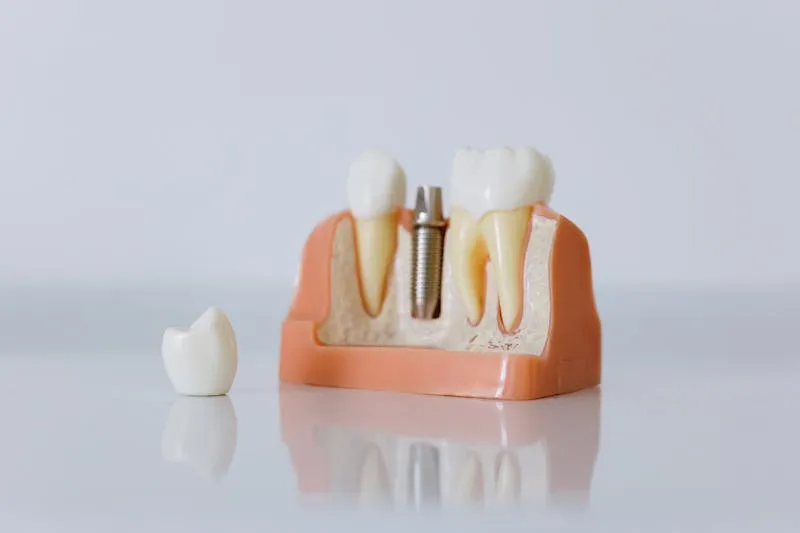
A dental implant has three parts: the post, the abutment, and the crown. Photo: Pexels
It starts with a conversation, not a drill
The first appointment is just a talk. Dr. Hoang looks at the gap, takes a 3D scan of your jaw, and checks whether there is enough bone to hold an implant. Some patients who have been missing a tooth for years have lost bone density in that spot. If that is the case, he will discuss bone grafting options before moving forward. Irene usually walks patients through the timeline and insurance details after the exam — she has been doing it long enough to know exactly which questions people forget to ask.
The implant itself goes in faster than you think
The surgical part is surprisingly quick for most single-tooth cases. Dr. Hoang places a small titanium post — we use Straumann implants, which are Swiss-made and have one of the longest track records in the industry — directly into the jawbone. It is done under local anesthetic. Most patients tell us it hurt less than they expected. The post sits under the gumline and you go home the same day.
Then you wait (and that is normal)
Here is the part nobody loves: the healing period. The bone needs to grow around the implant post and lock it in place. That takes anywhere from three to six months depending on the person. You will have a temporary solution so the gap is not visible, but the permanent crown does not go on until Dr. Hoang confirms the integration is solid. Rushing this step is how implants fail — and we do not rush it.
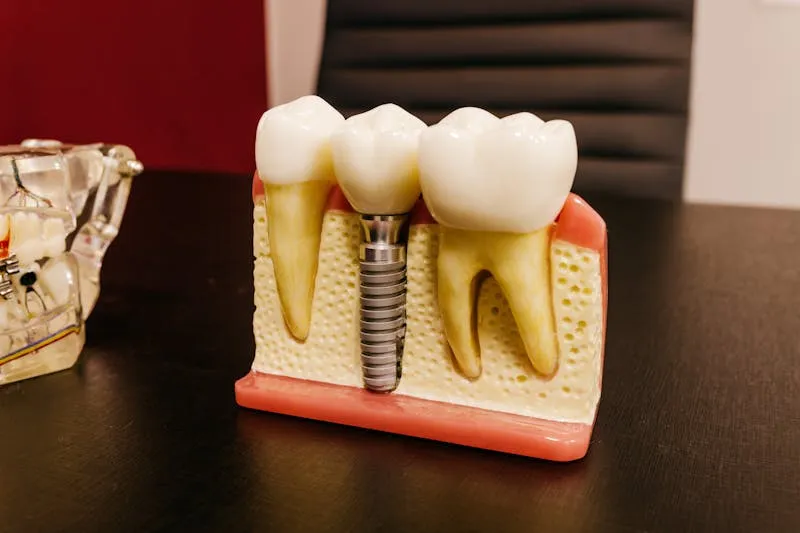
Dr. Hoang walks through every step before starting any work. Photo: Pexels
The final crown
Once the bone has healed around the post, you come back for the abutment and crown. Dr. Hoang takes impressions or uses the CEREC scanner depending on the tooth location. The crown is color-matched to your other teeth. When it clicks into place, that is it. You brush it, floss it, and eat with it like any other tooth.
Who is a good candidate
Most healthy adults with a missing tooth or a tooth that cannot be saved are candidates. The main things Dr. Hoang evaluates are bone density, gum health, and whether you have any uncontrolled conditions like diabetes that slow healing. Smokers can still get implants but need to know that smoking slows bone integration and raises the risk of complications. We always have that honest conversation up front.
If you have been thinking about an implant or just want to know your options, call 858.558.2121 or book online. We are open Saturdays until 2pm — Dr. Hoang often does implant consultations on those mornings when the schedule is less packed.
Related: Our Dental Services · 5 Signs You Need a Crown · When to Replace an Old Filling
Our practice follows guidelines established by the American Dental Association (ADA) and the California Dental Association (CDA).